
How Court Reporters Ensure Fair Trials
Every word counts in a courtroom. When testimony comes quickly and exchanges get heated, accuracy is the one thing that holds everything together. Court reporters are the people who make sure that happens. Without them, a fair trial would be much harder to come by.
What Do Court Reporters Do?
Court reporters turn spoken words into precise, certified legal transcription. They capture who said what, how they said it, and when it happened, so nothing gets lost or misremembered.
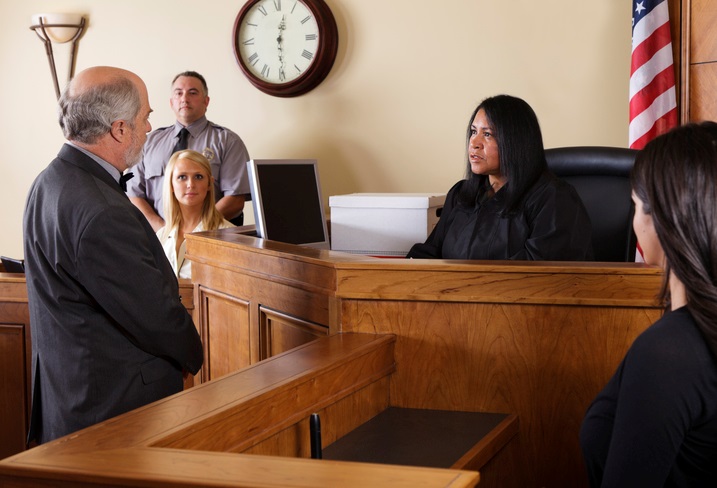
Court reporters create the official record of all types of legal proceedings, both in and out of the courtroom, including depositions, hearings, and trials. This record is what lawyers reference in briefs, what judges rely on for rulings, and what appellate courts review before making decisions.
This job requires more than just sitting quietly on the sidelines, typing on a stenotype machine. Court reporters swear in witnesses, mark exhibits, provide real-time feeds for attorneys, and read back testimony upon request. In depositions, they call for order when people talk over each other. In trials, they track objections, rulings, and sidebars. Their work ensures that when anyone revisits a case later, every detail is in its rightful place.
Courtroom Accuracy and Legal Justice
Accuracy in the courtroom keeps the justice system fair for everyone. A single misheard phrase can change the meaning of testimony or alter how a judge interprets evidence. Court reporters protect against this by recording every word as it’s spoken, even when multiple voices overlap or legal jargon enters the mix.
An accurate transcript keeps trials grounded in facts, not emotions. It helps attorneys prepare and reference prior testimony without guessing or paraphrasing. It also levels the playing field by giving both sides access to the exact same record at every stage of litigation. If the cases move to appeal, the record becomes the foundation for the entire review.
How Court Reporters Ensure Fair Trials
Court reporters work consistently, objectively, and with technical skill. Here’s how they keep things fair:
- Real-time reporting: Attorneys can follow along live, adjusting their questions and strategies as testimonies unfold.
- Impartial transcripts: Court reporters serve as guardians of the record. Their work never favors one party or the other.
- Accurate readbacks: When something is in question, reporters can instantly replay or read back statements to eliminate confusion or misunderstandings.
- Exhibit organization: Reporters note when exhibits are introduced or discussed and label them correctly in the transcript, so anyone reviewing the record can link testimony to the right documents or materials.
- Specialized knowledge: Legal and technical terms are no problem for court reporters. They are trained in courtroom language and know how to capture jargon accurately.
- Appeal-ready transcripts: Certified, complete transcripts preserve the record for review if the case is ever revisited or appealed.
Court Reporters’ Jobs Are Evolving
Court reporting has come a long way from the early days of shorthand pads and manual typewriters. Back then, transcripts were produced line by line, and attorneys waited days or weeks for a finished copy. Every correction had to be made by hand, and distributing the record meant printing and mailing multiple paper copies.
The introduction of the stenotype machine allowed court reporters to capture speech faster and more accurately. Real-time transcription software followed, instantly converting shorthand into readable text.
The digital era has further increased efficiency. Modern court reporters sync video depositions with written transcripts, manage digital exhibits, and use secure online depository systems to store and share documents. Turnaround times that once took several days now take just a few hours.
Remote work has also reshaped the profession. Virtual depositions and hearings are now the norm, and skilled reporters handle them with the same accuracy as in-person sessions. Many have become technical experts and language specialists, managing new platforms and ensuring online confidentiality.
Why Court Reporters Remain Indispensable
As the legal world moves faster and becomes more digital, it’s tempting to assume that traditional roles like court reporting will fade away. In reality, they’re more essential than ever.
Technology may evolve to better support legal transcription, but it can’t replace human judgment. Automated systems might capture words, but they don’t understand context. They can’t recognize when a witness mumbles, when two people speak at once, or when tone shifts the meaning. Court reporters handle all of this instinctively.
They also bring ethical accountability to the job. Reporters remain impartial, protect sensitive information, and treat all parties equally. Today’s courts may use more screens and remote connections than ever, but the justice system still runs on accuracy and fairness. Court reporters keep these principles intact.
Partner with Us, Guardians of the Record Since 1964
In short, fair trials depend on clear documentation, and court reporters make that possible. Talty Court Reporters utilizes the latest technology to deliver the very best results in your legal case. Turn to us for top-quality court reporting and transcribing services, video and audio conferencing, remote depositions, and much more. For additional information about our services or to request a cost estimate, please contact us today.